


 English
 Español
-
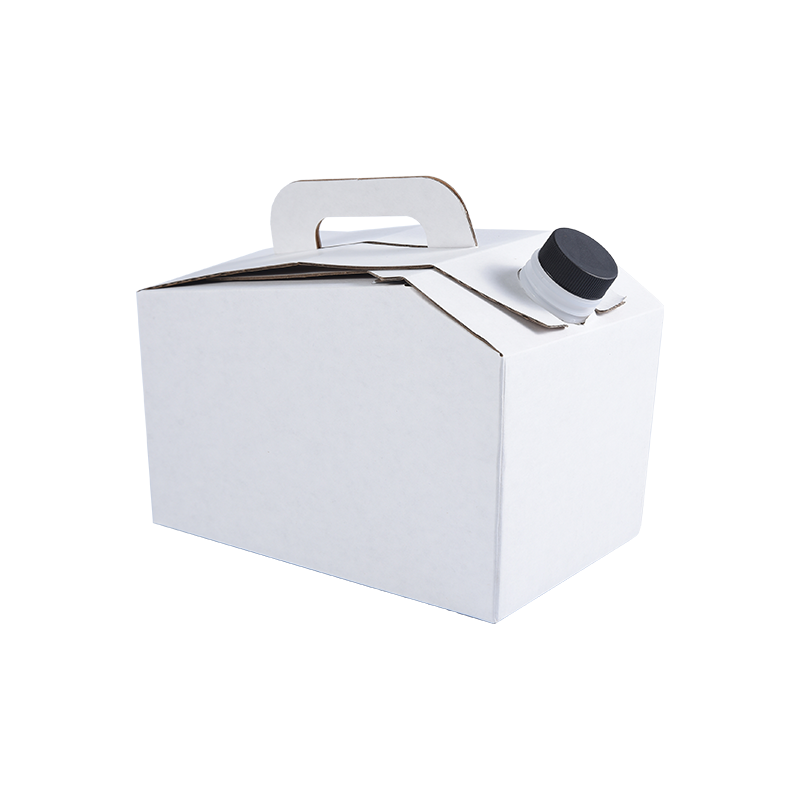 96oz Kraft Coffee/Drink to Go Container/Coffee Carrier Box
-
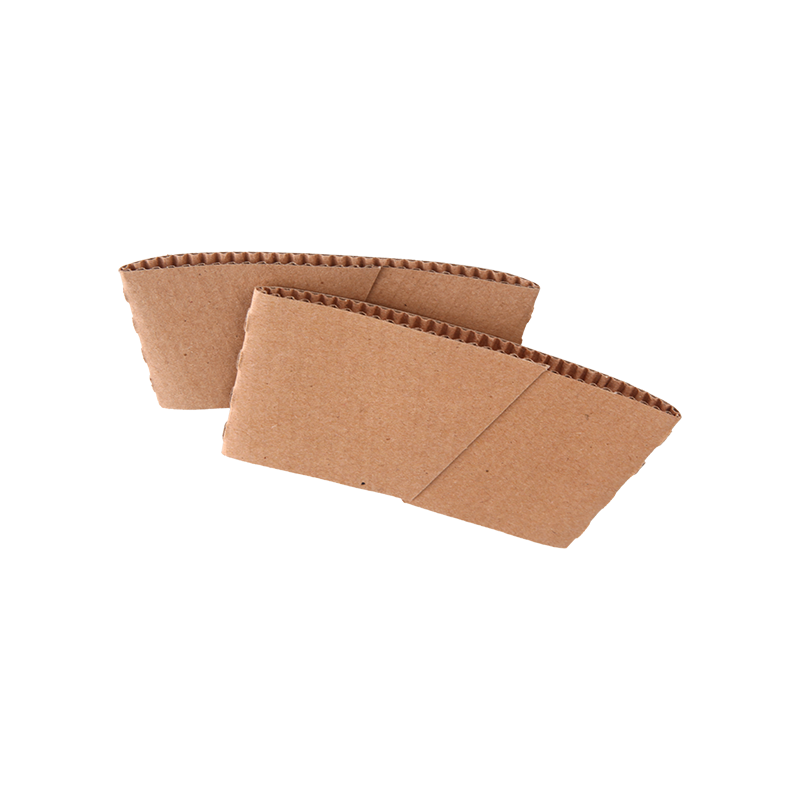 Recyclable Paper Cup Holder Sleeves
-
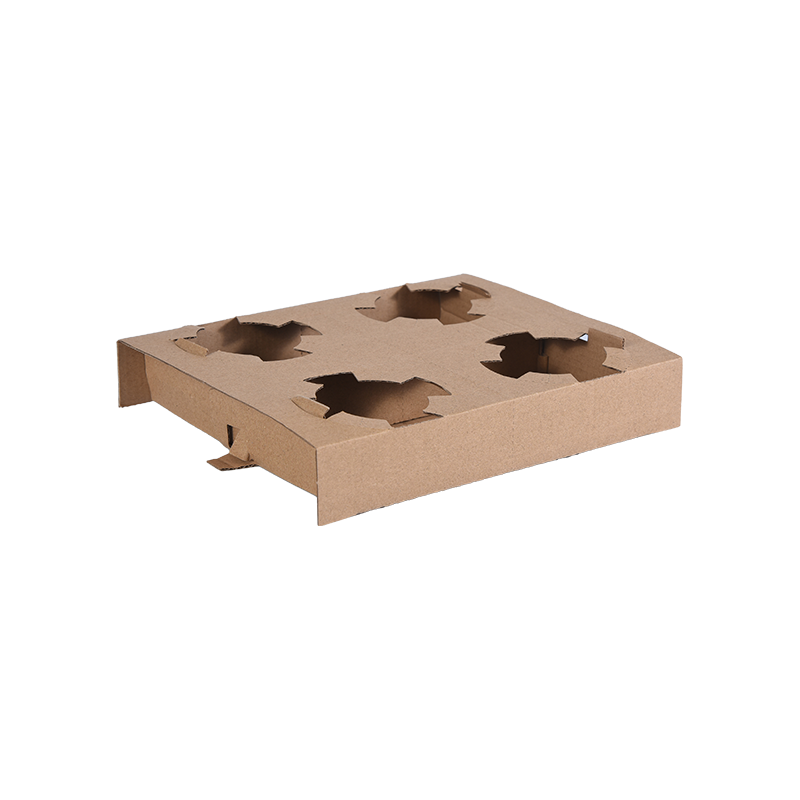 4 Cup Tray Holders for Hot & Cold Drinks – Foldable, Durable, and Cup Carrier for Takeaway, Festivals, Coffee Shops & Events
-
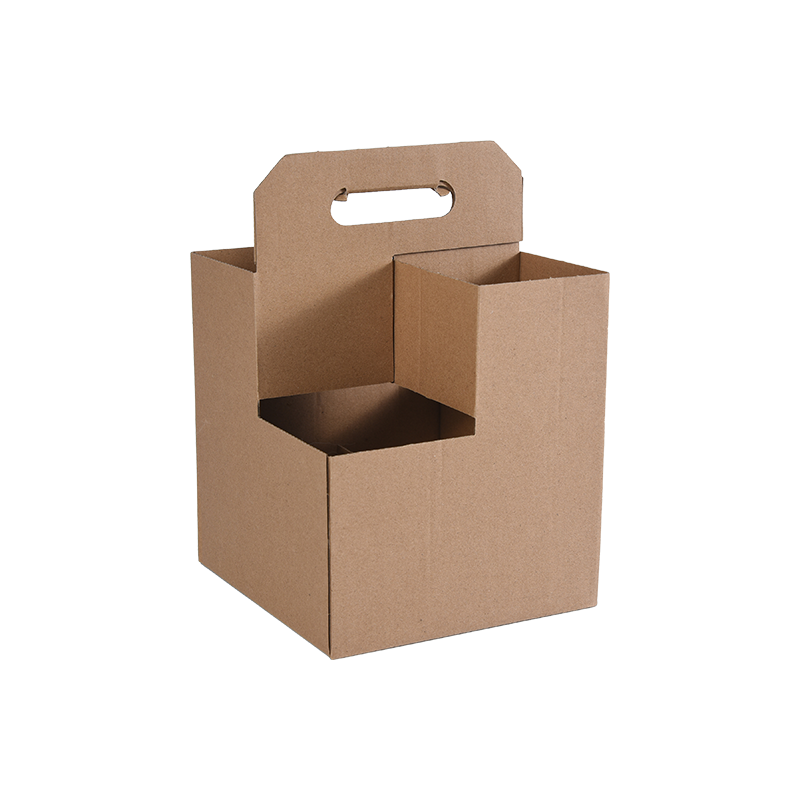 Kraft Cup Drink Carrier with Handles
-
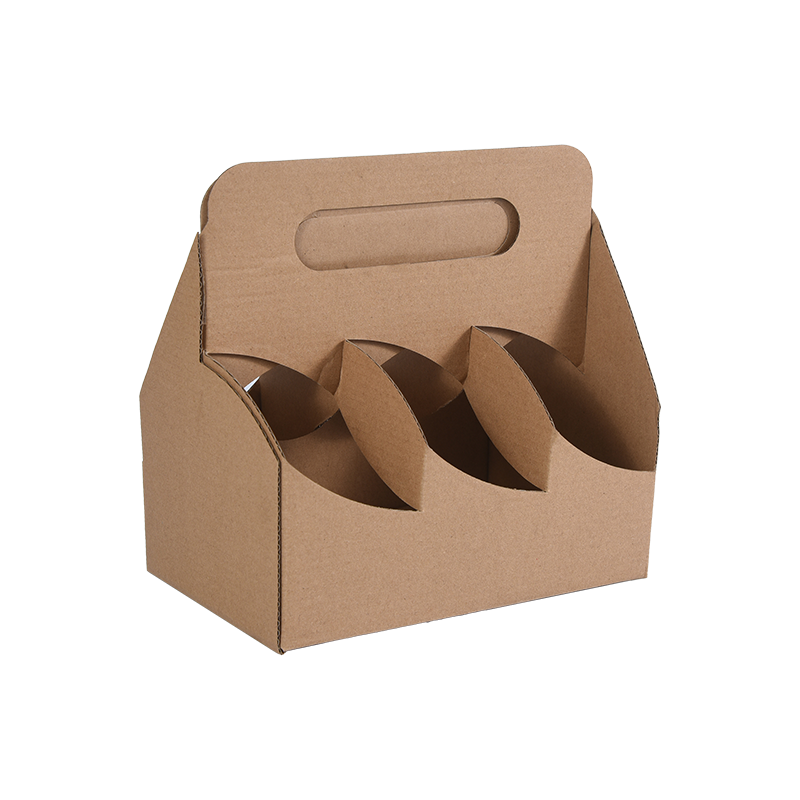 Kraft Beverage Carrier with Handles (6 to 8 Bottles or Cans)
-
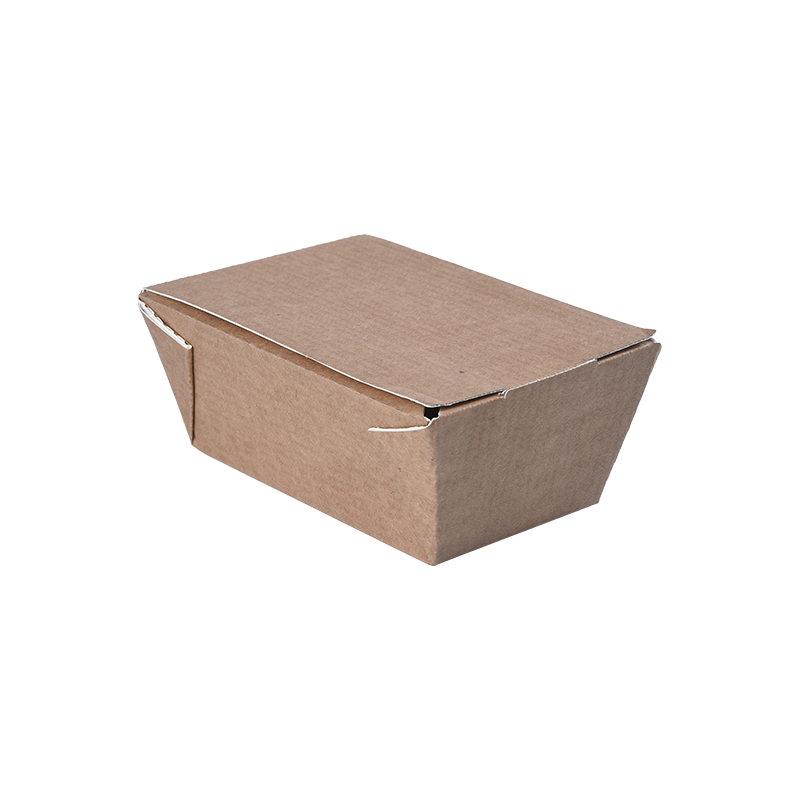 Corrugated Kraft Cardboard Lunch Boxes
-
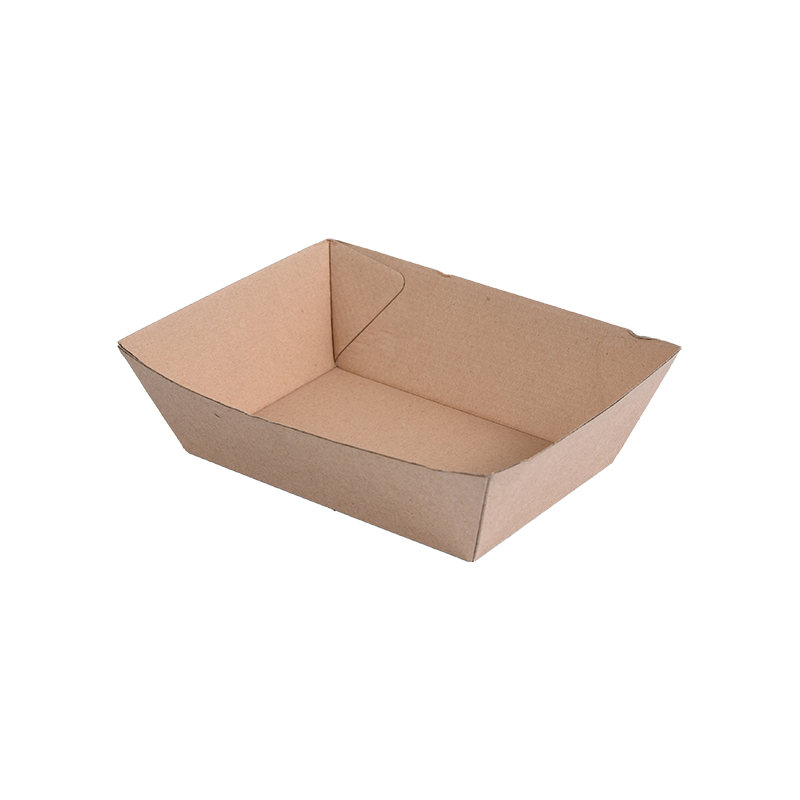 Disposable Rectangular Corrugated Paper Food Trays
-
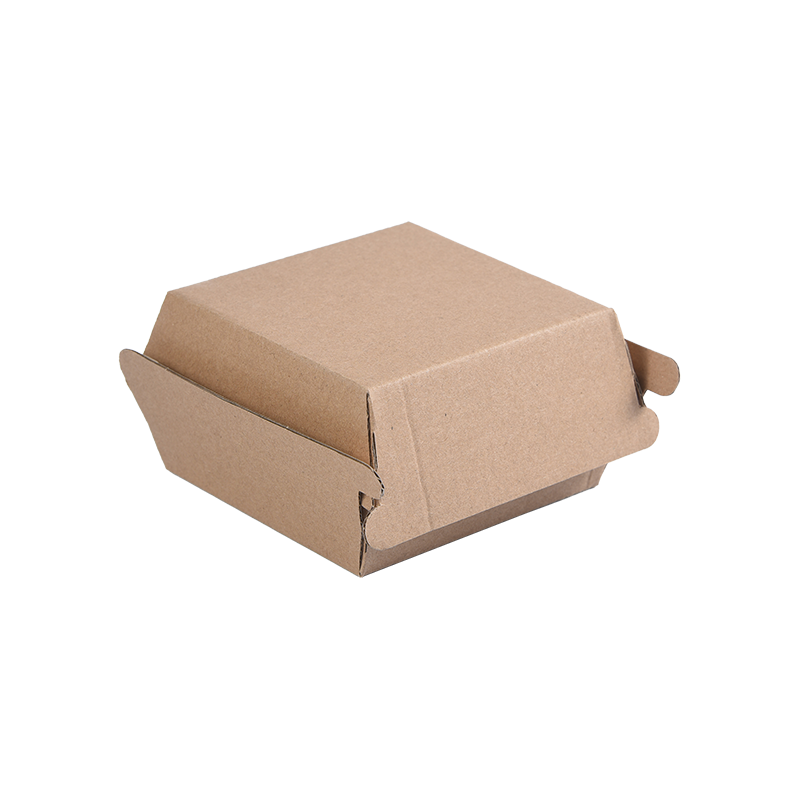 Restaurantware Corrugated Paper Burger Box
How Does Die Cutting Work? Inside the Pressure Process That Shapes Paper Packaging
A kraft cup carrier holds four drinks steady because a shaped blade punched its openings through thick paperboard in a single press stroke. That operation is die cutting, and it is the reason flat sheets of paper, paperboard, and corrugated board become food boxes, trays, sleeves, and carriers at a speed and consistency hand cutting cannot approach.
The short answer to how die cutting works: a custom-shaped tool with sharpened steel edges, called the die, is pressed into a sheet with enough controlled force to cut through the material in one clean pass. The principle is the same as a cookie cutter, engineered with industrial tonnage, precise alignment, and blades built to hold their edge for tens of thousands of cycles. In paper food packaging, die cutting rarely works on the outline alone: the same stroke usually creases the fold lines too, which is how a flat blank turns into a box that folds without cracking.
What a Die Actually Is
In manufacturing, a die has nothing to do with dice. The most common tool in packaging production is a steel rule die: a strip of hardened steel, called the rule, with one precision-ground sharp edge, bent into the exact outline of the shape to be cut and anchored into slots in a plywood or resin base. Because every blade is fixed in position relative to the others, every piece cut from that die comes out identical, whether it is the first or the hundred-thousandth.
A working die carries several blade and support components, each with a distinct job:
- Cutting rules carry a sharp edge and sever the material completely along the outline.
- Creasing rules have a rounded edge; they compress the board instead of cutting it, forming the fold lines a box needs.
- Perforating rules cut a dashed line, creating tear-off tabs or ventilation slots.
- Ejection rubber sits alongside the cutting edges and springs the sheet back off the blades after each stroke, so the material releases instead of sticking or tearing.
The Working Cycle, Step by Step
Whatever the machine format, production follows the same sequence:
- Mounting — the die is locked onto the press platen or die cylinder, blade edge facing the material.
- Feeding — individual sheets or a continuous roll are advanced into the cutting station.
- Registration — front and side guides align the sheet against the die within tight margins, so cuts land exactly where printed graphics and existing features sit.
- Pressure — the platen closes or the cylinder rolls across, forcing the sharpened edge through the substrate.
- Penetration and ejection — force concentrated along a hair-thin edge shears the fibers cleanly; ejector rubber then pushes the sheet clear of the blades.
- Stripping — the waste skeleton is separated from the finished blanks, which move on to folding, gluing, or packing.
The defining detail is in step four. A sharp edge concentrates force onto a contact line measured in fractions of a millimeter, so even heavy double-coated paperboard or corrugated board shears under a press rated in tons. Dull blades do the opposite: they compress and burst fibers rather than cut them, which shows up later as fuzzy edges and cracked corners.
The Main Machine Formats
Flatbed die cutting
The die lies flat on a platen and the press closes vertically, like a stamp. Flatbed presses deliver high, evenly distributed pressure, which suits heavy paperboard, laminated board, and corrugated blanks, and they hold crease geometry well. Setup is comparatively quick, so this format is a common choice for box blanks in short-to-medium production runs.
Rotary die cutting
Here the die is a cylinder and the material runs continuously between the die cylinder and a hardened anvil, so the cut rolls through the web instead of stamping sheet by sheet. Rotary systems run at very high speed, which is why labels, flexible films, and thin laminates dominate this format. A rotary die can also kiss cut, penetrating only the top layer and leaving the backing intact, the way stickers stay attached to their liner until peeled.
Digital and laser cutting
Tooling-free methods follow a digital file and cut without a physical die. They eliminate tooling cost and lead time, which suits prototypes and very small runs, but their throughput cannot compete with tooled production once volume climbs.
Manual desktop machines
Craft-sized machines run on the same physics at human scale. The die is placed sharp side down on the material, the stack is built between cutting plates into what crafters call a sandwich, and rollers transfer pressure as a handle turns. The comparison is more than trivia: it shows that die cutting always comes down to three things, which are a sharp edge, controlled pressure, and firm support underneath.
| Attribute | Flatbed die cutting | Rotary die cutting |
|---|---|---|
| Motion | Vertical press stroke per sheet | Rolling contact along a continuous web |
| Best-fit materials | Heavy paperboard, laminates, corrugated blanks | Labels, films, thin paper webs |
| Speed profile | Lower per cycle | Very high continuous throughput |
| Cut types | Through cuts and precise creases | Through cuts and kiss cuts |
| Typical packaging output | Box blanks, carriers, trays | Labels, sleeves, kiss-cut components |
Through Cuts, Kiss Cuts, and Creases
The pressure principle stays constant, but what the blade does to the material varies, and the difference matters when you specify packaging:
- Through cut (complete cut) — the blade passes fully through the sheet and separates the piece, as with a box outline, a window aperture, or a handle opening.
- Kiss cut — the blade penetrates only a surface layer and leaves the backing intact, as with stickers and labels.
- Crease (score) — a rounded rule compresses a fold line without severing the sheet.
- Perforation — a dashed cut line for tear strips, vents, or easy-open features.
Creasing deserves particular attention. Folding uncreased paperboard stretches the outer surface and cracks coatings or bursts fibers at the fold. A crease compresses the inner structure so the board bends on the designed line at a consistent force. In a typical box blank, a single press stroke cuts the outline through, cuts any windows out, and creases every fold line, so one hit produces a finished flat blank ready for folding and gluing.
Where You See Die Cutting in Food Packaging
Most disposable paper food packaging begins as a die-cut blank that is later folded, glued, and stacked for shipping. A few everyday examples:
- A four-cup drink carrier gets its seating openings, handle spans, and fold lines from one corrugated or kraft blank.
- A triangle sandwich wedge gets its window aperture and fold lines from a single sheet of kraft board.
- A gable treat box carries its handle slot, lock tabs, and every fold line in one blank, so it stores flat and folds at the counter in seconds.
Each of those parts only works when the cut and the crease are held to tight tolerance, which is why the same products from different suppliers can feel noticeably different in the hand.
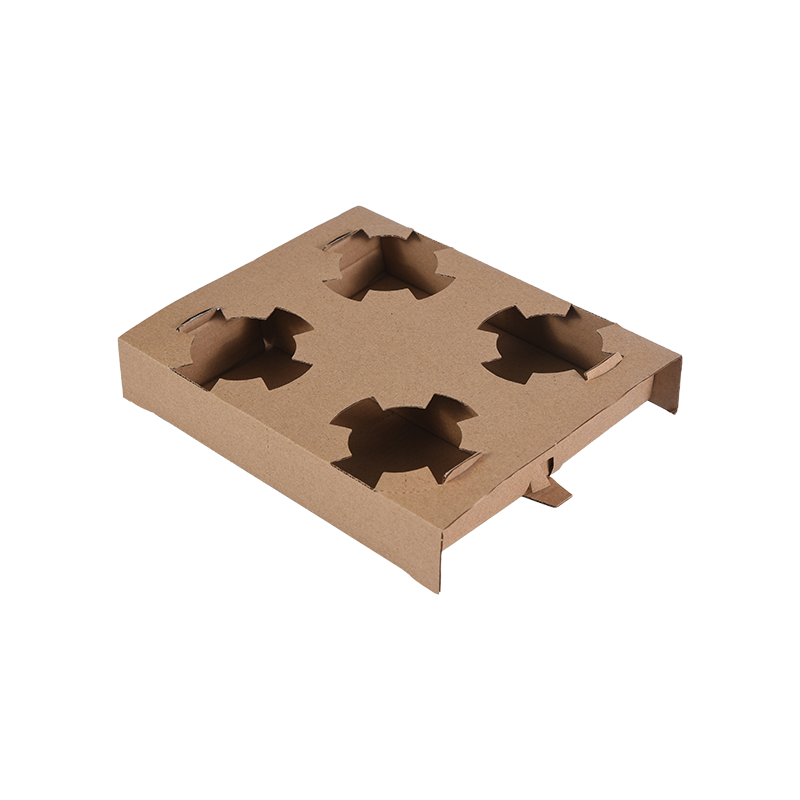 Foldable 4-Cup Kraft Drink Carrier for TakeawayHolds up to four cups or containers from 8 to 32 oz in a sturdy multi-compartment design, stackable for storage. A good example of how precise cutting and creasing keep carriers reliable in hand.View Product →
 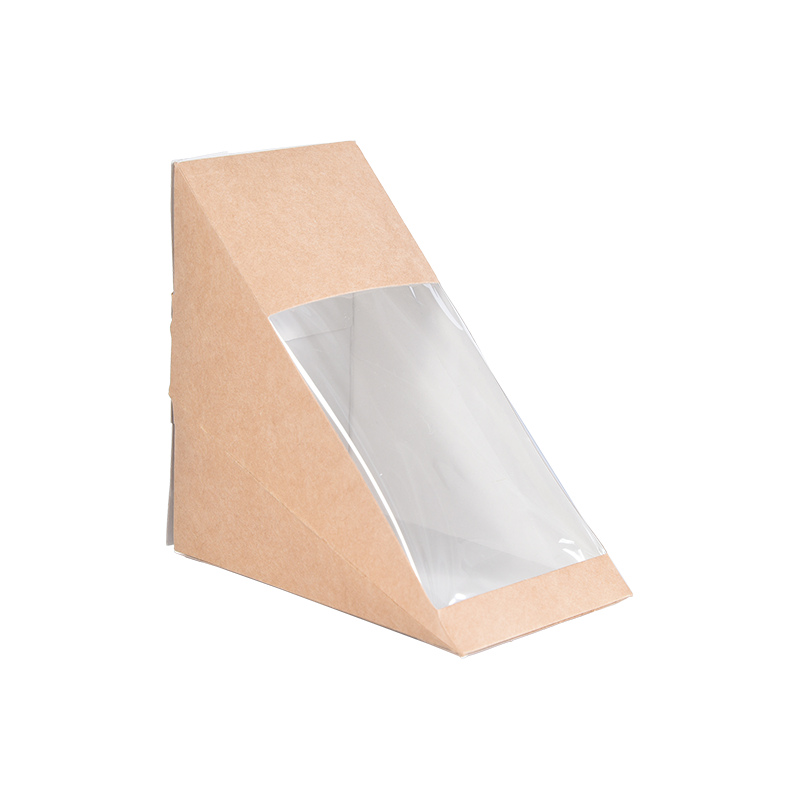 Kraft Triangle Sandwich Wedge Boxes with PET WindowMade from water-based anti-grease coated kraft paper with a PET window, supplied flat for easy storage and assembly. Clean creases and cuts matter here for neat, secure takeaway sandwich packaging.View Product →
 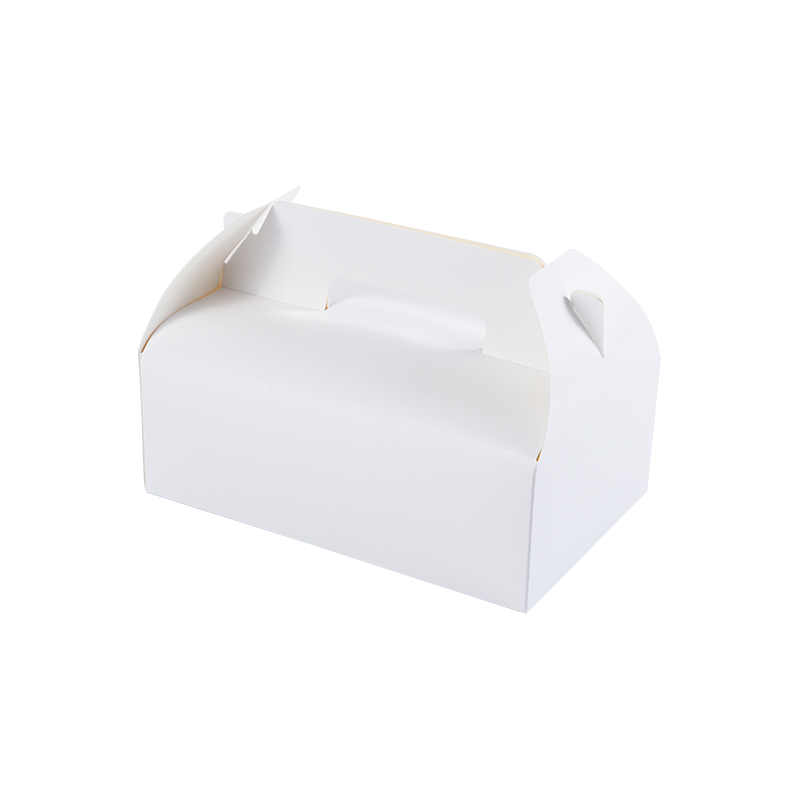 Kraft or White Paper Gable Treat BoxesFlat-packed gable boxes in kraft or white paper, assembled by pressing the sides, with adjustable sizing and custom printing options. Accurate die-cutting ensures they fold and hold shape cleanly.View Product →
Corrugated board adds one more variable: the flute. Blade height, crease width, and pressure must match the flute profile, or creases crack the liner and flatten the flutes. Board grade and die setup interact the same way flute choice interacts with heat retention and stacking strength; if you are sourcing pizza or burger packaging, our guide to B-flute versus E-flute corrugated pizza boxes walks through those trade-offs in detail.
Timing matters as well. In packaging production, die cutting usually follows printing, so registration between the printed graphics and the cut lines determines whether windows frame the artwork and logos sit centered on panels. When you audit supplier samples, check that alignment on windows and folded seams first; it reveals press calibration faster than any specification sheet.
What Buyers Should Evaluate
If you are sourcing die-cut packaging, the process details translate directly into procurement checks:
- Registration consistency — cuts that drift from print or vary from blank to blank signal press or tooling wear.
- Edge quality — clean shear versus fuzzed, compressed fibers tells you whether blades are maintained and matched to the material.
- Crease performance — fold a sample blank by hand; the fold should land on the crease without cracking the coating.
- Tooling economics — a custom steel rule die is a one-time investment amortized across the order, so unit pricing improves with volume; confirm who owns the die and how wear replacement is handled.
- Material match — confirm the supplier sets blade and crease specifications per board caliper and flute profile rather than running one generic setup across every board grade.
These checks take minutes with sample blanks in hand, and they predict real-world performance far better than a price comparison alone.
Die cutting works by concentrating force along a shaped, sharpened edge, and at its core there is nothing more complicated than that. The engineering sits in keeping that edge sharp, registering every stroke, and matching blade and crease design to the material being cut. The next time a burger box folds without splitting a seam, or a coffee carrier lifts four cups without tearing at the handle, you are looking at the accumulated decisions of the die cutting line: blade geometry, pressure, crease depth, and the discipline to hold all three steady, stroke after stroke.

-
how to pack tacos for delivery: Applications, Selection Criteria, and Practical Guidance
Delivering tacos has become a daily challenge for many restaurants and food trucks. Unlike burgers ...
-
how to transport cupcakes: Applications, Selection Criteria, and Practical Guidance
Cupcakes are small, but moving them safely is a bigger challenge than most people expect. A slight ...
-
How Many Oz in a Chinese Takeout Box? Pint, Quart and Half Sizes Explained
Few questions reach our inbox as often as this one, and it nearly always arrives from someone holdi...
-
How Are Today's Foods Typically Packaged? A Complete Modern Guide to Paper Packaging
Walk into any restaurant, coffee shop, or delivery kitchen today, and you will see packaging that b...
-
How to Pack Food for Takeaway: Essential Paper Container Tips for Restaurants
When a customer orders takeaway, they are not just buying a meal; they are buying the convenience o...
-
How Do You Calculate Package Size? A Practical Guide for Food Businesses
Ask anyone who has packed a few hundred takeaway orders in a single evening and they will tell you:...
 Building 4, Leyin Industrial Park ,No. 330 Qianchun Avenue, Zhanqi Town, Yinzhou District, Ningbo, China
 +86-574-82813668
 Instagram
Copyright © Ningbo Shuohui New Material Technology Co., Ltd. Rights Reserved.
 Custom Disposable Paper Food Packaging Manufacturers